Filtered — The One®
One filter, flat attenuation: the volume drops, the music stays true, and awareness of the field stays intact. Our best-selling marching band earplug and the choice of entire programs.
$224.95Shop The One
60% of incoming freshmen already have ringing in their ears. 70% already have noise-induced damage. A marching band lives inside 100+ decibels — the drumline, the brass, the field — for hours a day, and the damage is permanent. The problem was never that students don’t care; it’s that ordinary earplugs muffle the music and kill awareness, so they refuse to wear them. We spent four years with the University of South Carolina solving exactly that. The result is The One®: patented custom earplugs that protect young ears while the music, the count and the drum major come through clear.
Marching band is one of the loudest places a teenager will ever stand — sustained 100-plus decibels from the drumline, the brass and the field, hours a day, for years. The damage is silent, cumulative and permanent, and the numbers are brutal: among incoming college freshmen, an estimated 60% already report ringing in their ears and 70% show noise-induced hearing loss. They’re losing their hearing before their careers even begin.
The reason students won’t wear ordinary protection is simple — foam and generic musician plugs muffle the tone, add back-pressure, and isolate them so they can’t hear the count, the section or the drum major. After four years developing with the University of South Carolina, we patented The One®: custom marching band earplugs that drop the volume to a safe level while the music stays clear and situational awareness stays intact. Hand-built in the USA, with school hearing-conservation programs available.
Hearing damage is silent, cumulative and permanent — and a marching band is one of the loudest places a teenager will ever stand. The data from NIOSH, the CDC and peer-reviewed research is not subtle.
NIOSH’s safe ceiling for a full day of sound. A marching band blows past it and keeps climbing.
A real rehearsal — drumline, brass and the field — sustained for hours, several days a week, all season.
Middle- and high-schoolers already show measurable, noise-related hearing loss (CDC).
How much more likely musicians are to develop noise-induced hearing loss than everyone else.
More likely to develop tinnitus — the ringing that is the sound of damage being done.
Preventable. Noise-induced hearing loss never heals — but it never has to start.
NIOSH math: every 3 decibels cuts the safe exposure time in half. A rehearsal doesn’t just cross the line — it laps it.
Now stretch that across a three‑hour rehearsal, several days a week, for four years of school. The exposure isn’t close to safe — it’s off the chart.
Your child stands in 90–115 dB for hours, for years, at the age their hearing should be at its sharpest. It’s silent and permanent — and as many as 1 in 6 students already has it. Even mild loss quietly drags down grades, language and focus.
Dosimetry clocked a band director at 92 dB(A) across a single rehearsal, and 52% of musicians exceed the safe daily dose. Your whole program lives above the limit. Hearing conservation is fast becoming the standard — and protecting the band protects the program.
Research shows players unconsciously play louder with foam to fight the muffling — and you still can’t hear pitch, blend or the drum major. So you pull them out. That’s why protection use is so low, and tinnitus so high, among musicians.
Five years of interviewing students, directors and touring musicians turned up the same short list of objections — over and over. Here is every one, and the research that settles it.
The fear is always the same — “earplugs will muffle me.” That is true of foam. It is the opposite of what The One® does. Flat attenuation turns the whole field down evenly, so you hear the exact tone you’re playing — the overtones, the pitch, the blend — just at a level that won’t cost you your ears. For a player, protection isn’t a sacrifice. It’s an upgrade.
Flat attenuation drops every frequency by the same amount. Foam dumps the highs first — that’s the dull, underwater sound you hate. Keep the highs and the timbre, the overtones and your pitch reference all stay true.
In a controlled study, players unconsciously performed louder with foam to fight the muffling — and mis-tuned doing it. With flat musician plugs they played close to normal. The One® lets you keep your real dynamic and your real intonation.
When researchers recorded musicians playing with and without earplugs, trained and untrained listeners could not identify which was which. The sound you’re protecting is the exact sound the crowd still hears.
Unprotected ears fatigue and go dull deep into a long rehearsal — that muffled, ringing feeling afterward is a warning, not a quirk. Protected ears stay fresh, so your blend and pitch hold all the way to the last rep.
“They’ll muffle my sound — I won’t be able to tune or blend.”
This is the number-one reason musicians skip protection in every survey ever run — and it’s aimed at the wrong product. Foam muffles. A flat-attenuation custom plug lowers the whole spectrum evenly, so tone, pitch and blend stay intact. In blind tests, listeners couldn’t tell protected playing from open playing. NIOSH itself tells musicians to use flat-attenuation earplugs — not foam.
Beach & O’Brien; Thomas et al. (2020); NIOSH“I won’t hear my section, the count, or the drum major.”
That’s isolation — what foam and earmuffs do. The One® doesn’t cut you off; it lowers everything by an even amount, so speech, the count and your section come through clearly, just safer. Full situational awareness is the entire reason it was patented. You stay locked into the ensemble — you just stop taking the damage.
Big Ear field research; flat-attenuation design“It looks uncool. Nobody else wears them — I’ll look weak.”
Researchers found appearance is a real barrier — people worried about “funny looks” are far less likely to protect their hearing. But custom plugs sit flush and discreet, in your school’s colors if you want. And the fastest way to flip the room is the one the research points to: when the drum major and section leaders wear them, everyone follows. Touring pros and military bands already do. Protected isn’t weak — it’s what the people who do this for a living look like.
Gilles et al.; HPD role-model intervention studies“My hearing’s fine. I’m young — it’s not that loud.”
It doesn’t feel loud enough to hurt — that’s exactly the trap. Noise damage is silent, painless and cumulative, and it never heals. An estimated 45% of student musicians already have permanent damage by age 25. The ringing or muffled feeling after rehearsal isn’t nothing — it’s the damage happening. Early loss doesn’t show up as “quieter,” it shows up as “less clear,” right when you need your ears most.
Ear Peace Foundation; NIOSH; CDC“They’re a hassle — they fall out and I’ll lose them.”
That’s the foam experience — rolled, jammed in, working their way out, gone by week two. A custom plug is molded to your ear: one motion, a real seal, doesn’t back out when you march or play. Clip it to a lanyard and it lives with your instrument. One pair lasts years — you stop re-buying disposables and stop losing them.
Custom-fit vs. disposable HPD performance“They’re too expensive.”
Fair — cost is the barrier students name most after sound. But one custom pair lasts for years, where foam is a forever expense. The real comparison is the bill on the other side: hearing aids run thousands of dollars, for life, and they never give you back what you lost. Through a school program the per-student cost drops well below retail. Protecting your ears now is the cheapest hearing decision you will ever make.
“Too Loud to Ignore” survey (2025); program pricing“I need to hear my corrections and the whole ensemble — protection gets in the way.”
NIOSH’s own guidance is that the band director should wear flat-attenuation musician earplugs — because they preserve the detail you teach by. The One® keeps speech, blend and the podium clear; it lowers the level without flattening the music. And the honest truth runs the other way: ears that took a 92 dB rehearsal hear worse by hour three. Protection is how you keep the trained ear you built your career on.
NIOSH HHE 2011-0129; flat-attenuation guidance“It’s never been a problem. Nobody’s complained.”
In one survey of ensemble directors, only 1 in 15 rated hearing protection “extremely important” — most simply “don’t mind” if a student wears it. Meanwhile, when 42 band directors were actually tested, 86% showed measurable noise-induced hearing loss, and the average director retires wearing hearing aids. Silent damage doesn’t file complaints. The absence of a problem you can hear is not the absence of a problem.
“Too Loud to Ignore” (2025); Pisano, Grove City College“I can’t make students wear a medical device — that’s a liability.”
You’re not prescribing anything — you’re informing and providing access, which is exactly the model the experts use. The Department of Defense’s own school system requires both teachers and students to wear protection in any class loud enough to need it. The lowest-liability, highest-impact move costs nothing: model it yourself. Students copy what their director does long before they do what they’re told.
DoDEA hearing policy; NIOSH conservation guidance“I can’t afford to outfit the whole band.”
You don’t outfit it all at once. We build a hearing-conservation plan to your program’s budget — per-student pricing, phased by section, with on-site impressions at the school. Start with the drumline and the leadership and let it spread. The cost of doing nothing is a section of permanently damaged ears and your own hearing aids down the line. One is a line item. The other is irreversible.
Big Ear school program structure“Kids won’t wear them anyway.”
They won’t wear foam — and that’s exactly why use is so low. Foam muffles the music, so it ends up in the case. Students keep flat-response custom plugs in because the music stays true and nothing about playing gets harder. Pair that with leadership wearing them first, and adoption follows. The product was the problem the whole time, not the kids.
Beach & O’Brien; HPD uptake researchFoam. It muffles, it isolates, it falls out — so it gets refused, and the damage keeps happening. The One® was built over five years to remove every one of these objections at the source. Protect the music. Protect the ears that make it.
Students won’t wear protection that muffles the music or cuts them off from the field. The One® was engineered with a major university to fix exactly that — here’s why.
Flat, even attenuation drops the volume without muffling tone or color, so students hear what they’re actually playing.
No isolation, no back-pressure — they still hear the count, their section and the drum major across the field.
Brings 100+ dB down to a safe level, guarding young ears against the tinnitus and damage that hit most freshmen.
Comfortable, discreet and built from student feedback — protection that stays in because it doesn’t fight the performance.
We partner with schools on cost-effective hearing-conservation programs, from first impressions to the whole band.
The short version: most students wear the filtered The One® at $224.95 — one filter, flat attenuation, the music intact. Step up to two filters or our premium tier for more control, or start with a simple solid plug. Here’s how they compare.
One filter, flat attenuation: the volume drops, the music stays true, and awareness of the field stays intact. Our best-selling marching band earplug and the choice of entire programs.
More tuning and control for drum majors, section leaders and serious players who want options.
A simple, affordable solid seal for maximum quiet during the loudest rehearsals.
From the patented The One® to a simple solid seal, find the protection students will actually keep in.
Sixty percent of freshmen walk onto campus already hearing a ring that will never stop. That isn’t a statistic to a parent or a director — it’s a kid who loved music losing a piece of it before adulthood. Hearing damage from the field is permanent, and it’s completely preventable. Protect the students who make the music, and let them keep hearing it for the rest of their lives.
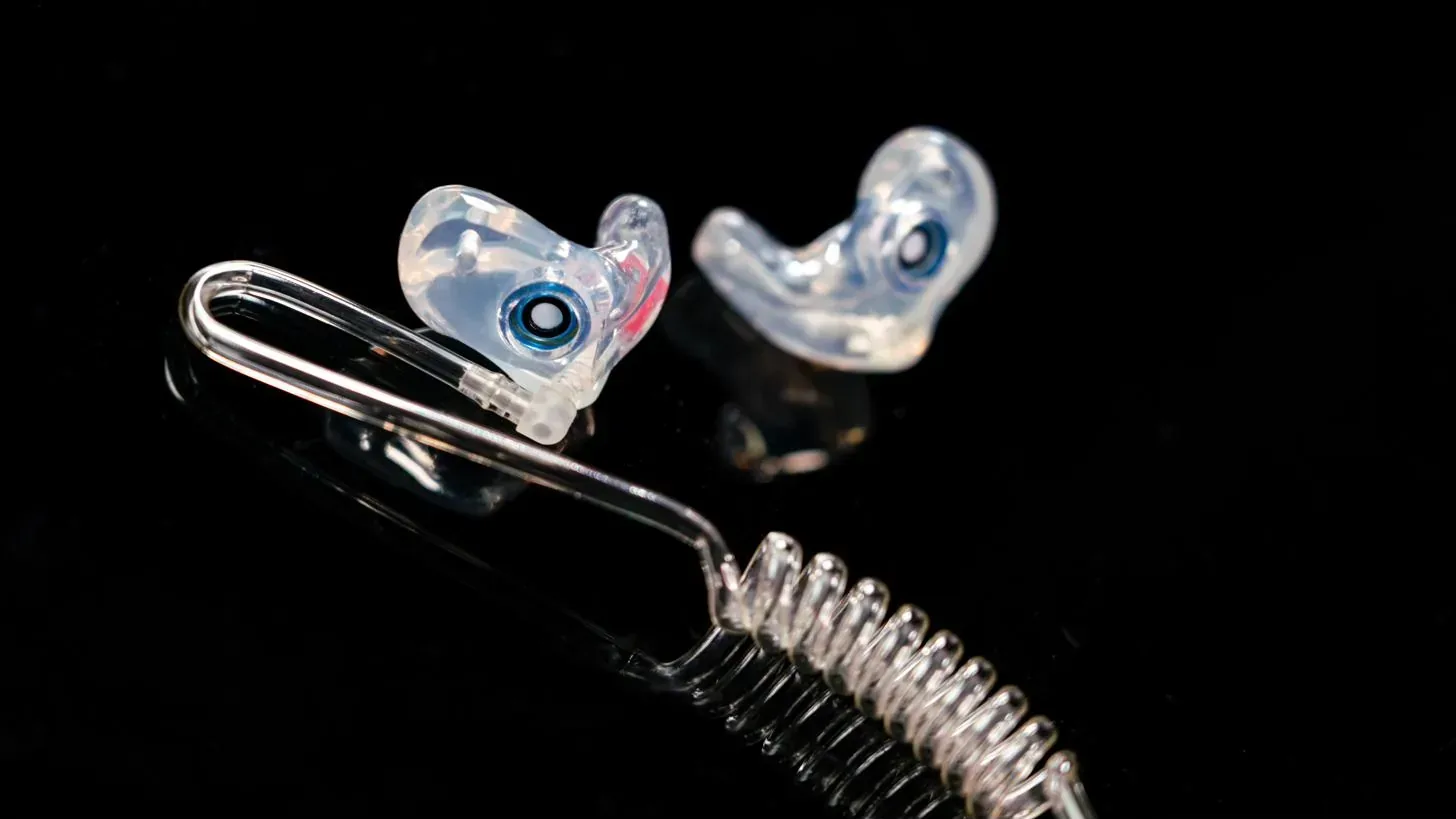
The set most students wear. Ordinary protection muffles the tone and kills awareness, so it stays in the case. The One® uses flat attenuation to drop the volume while the music stays true — the $224.95 single-filter set is our best-selling marching band earplug. Patented, built by hand, guaranteed to fit. Shop the band favorite →
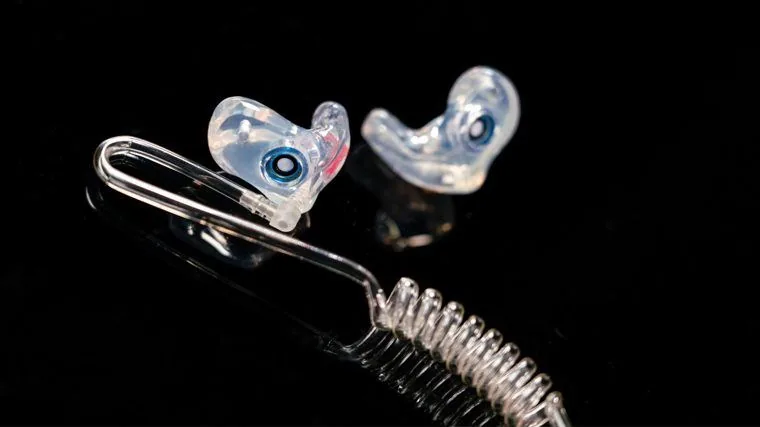
The patented The One® with a single filter: flat attenuation that drops the volume while the music, the count and the drum major stay clear. Our best-selling marching band earplug.
Two filters for more control over how much you hear — ideal for section leaders and drum majors who want options across rehearsal and performance.
Our premium marching band tier with the most refined tuning and finish — reference-level protection for serious musicians.
A simple, affordable solid seal for maximum quiet during the loudest rehearsals and indoor sessions.
A simple solid custom plug for maximum quiet — an affordable entry into protection for the loudest rehearsals.
Cups, pouches and lanyards to protect and carry protection for the whole section.
A rugged screw-top cup that keeps your custom plugs clean, paired and easy to find on the nightstand or in a bag.
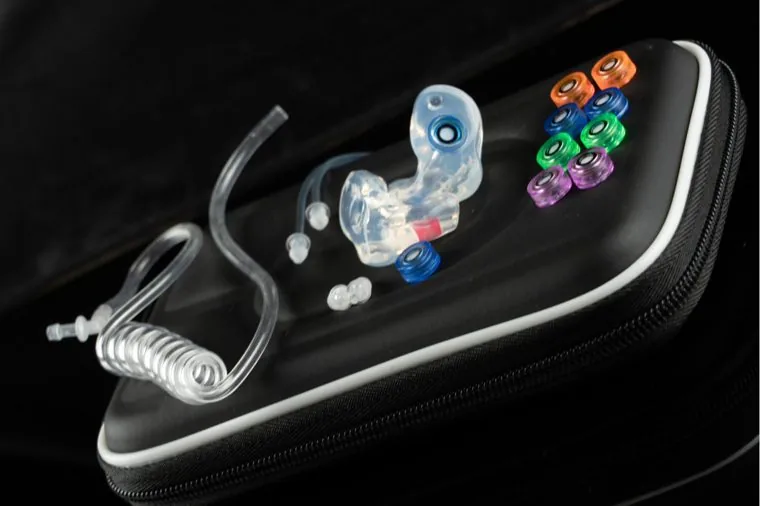
A soft zippered pouch that protects your earplugs and tucks into any bag.
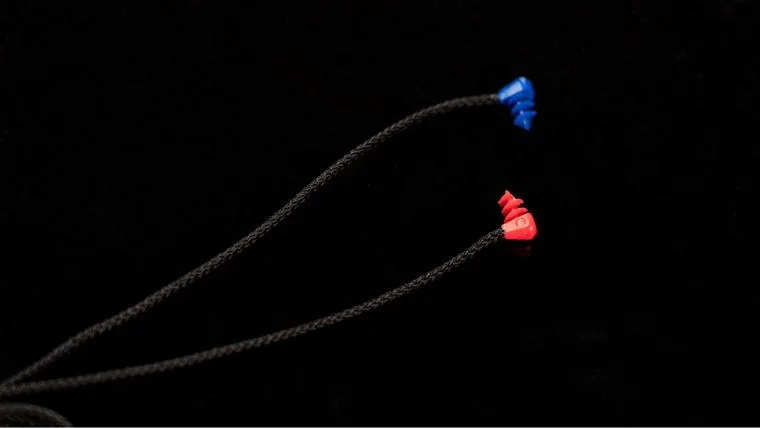
A screw-in lanyard so your plugs stay together and never go missing.
The questions directors, parents and students ask most before protecting young ears with The One®.
The best marching band earplugs are custom filtered plugs — specifically The One®, patented and developed with the University of South Carolina. A single filter drops the 100+ dB volume to a safe level while keeping the music, the count and situational awareness clear, so students will actually wear them. The filtered The One® is $224.95; solid plugs start at $105.
A marching band sustains 100-plus decibels from the drumline, brass and field for hours a day. That level causes permanent, cumulative damage — which is why an estimated 60% of incoming college freshmen already report tinnitus and 70% show noise-induced hearing loss.
Yes — that’s the whole point of The One®. Flat attenuation lowers the volume evenly without muffling tone, and it doesn’t isolate the player, so the music, the count and the drum major all stay clear. That’s why students keep them in.
Foam and generic musician plugs muffle the tone, create back-pressure in the head, and isolate the player so they can’t hear their section — so they get left in the case. We spent four years with USC engineering The One® specifically to remove those objections.
Yes. We partner with band programs on cost-effective hearing-conservation plans — we visit your school, set goals, and create an individualized plan to fit the whole band. We already work with USC, Delaware, Michigan State and Northern Illinois.
The One® is our patented custom marching band earplug, developed over four years with the University of South Carolina. It uses interchangeable filters and flat attenuation to protect young ears while preserving the music and full situational awareness.
Solid custom plugs start at $105, the patented filtered The One® is $224.95, two-filter sets are $299.95, and our premium tier is $574.95. Programs can be tailored to a school’s budget — contact us for a quote.
We take ear impressions at your school during a program visit, or students can use a provider or our mail-in Home Impression Kit. Each set is hand-built in the USA from those impressions.
Every product is backed by a perfect-fit guarantee plus a full warranty and repair program — if the fit isn’t right we remake it, and we repair your Big Ears to keep them protecting young ears for years.
New to custom hearing protection? Tell us how you'll use it and we'll match you to the right product, get your ear impression handled, and walk you through every step.
New designs, store openings and special events — be the first to know.
How it works
Your ears don't change when you switch hobbies, so your protection shouldn't either. The same custom-molded shell that protects a musician on stage protects a rider at 80 mph, a dentist over a drill, a pilot in the cockpit, and a machinist on the floor. You buy the fit once and adapt it to the moment by changing the filter — not by buying a different product.
"Turn the room down, not off."
The colored, interchangeable filters. Each lowers every frequency by about the same amount, so sound keeps its natural balance — voices, music, and warnings stay clear, just safely quieter. This is what makes the plugs hi-fi. Levels: 9, 15, 20, 25, and 30 dB.
"Open when it's quiet, clamped when it's loud."
A separate, level-dependent filter. It passes normal sound almost untouched so you keep full situational awareness, then automatically tightens against sudden, dangerous peaks — a gunshot, a backfire, an impact. Protection arrives only when the noise spikes.
Every off-the-shelf product makes you pick one behavior and live with it. Because the Big Ear shell is custom and the filters are interchangeable, you carry both and match the filter to the environment in seconds. No foam plug, and no single-filter "musician" plug, can match that range at this fidelity.
Maximum sealed silence. No filter path — the custom shell simply blocks. For sleep, heavy machinery, or any time you want the most reduction and don't need to hear in.
Adaptive protection that keeps you connected to sound while protecting you, with the filter swapped to the situation. Choose this when you still need to hear — with studio-grade clarity.
| Tier | Price | What you get | Who it's for |
|---|---|---|---|
| Standard | $224.95 | The custom filtered shell + one flat-attenuation filter of your choice. | You know the one environment you need. |
| Select | $299.95 | The shell + any two flat-attenuation filters you pick. | You move between two settings and want to swap. |
| Premium | $574.95 | The shell + all five flat filters + the non-linear filter + solid Full-Stop blockers + a tactical radio earpiece. The complete system. | You want every environment covered out of the box, from hi-fi listening to dead silence. |
The shell and fit are identical across all three — what you buy up the ladder is range. Start at Standard and add filters anytime; you're never locked in.